
B.E. Bio-Medical Engineering
B.E. Bio-Medical Engineering
Affiliation:
Anna University, Chennai
Duration:
4 Years
About the Department
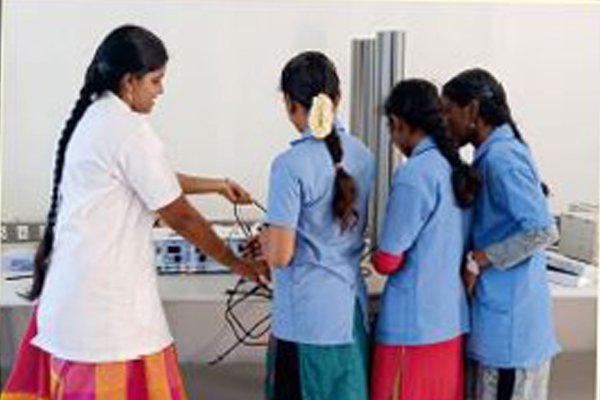
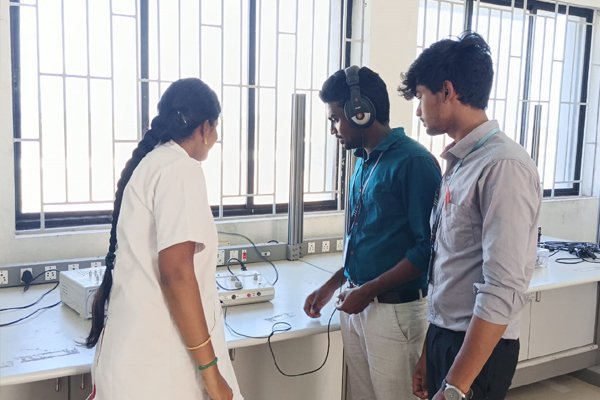
The Department of Bio-Medical Engineering at Sri Ramakrishna College of Engineering is committed to bridging the gap between engineering, medicine, and healthcare innovation. Established with the aim of producing skilled biomedical engineers, the department focuses on developing engineering solutions that improve diagnostics, therapeutic systems, medical devices, and overall patient care.
The programme integrates engineering principles with biological sciences, providing students with a deep understanding of electronics, instrumentation, imaging systems, biomaterials, and medical technologies. With advanced laboratories, experienced faculty, industry collaborations, and a strong emphasis on research, the department prepares students to contribute to the rapidly evolving global healthcare sector. Students gain practical experience through hands-on training, hospital exposure, clinical instrumentation practice, and project-based learning.
Vision
- To develop an innovative and multi-disciplinary skills relating the fundamentals of Biomedical engineering with other disciplines to improve the health care and to increase life expectancy.
Mission
- To enrich the learning skills and to emphasize the usage of technical knowledge to improve the quality and betterment of life.
- To practice excellence in Biomedical Engineering by relating engineering and medicine through education.
Programme Highlights
- Curriculum designed to blend engineering principles with healthcare applications.
- Specialized training in medical instrumentation, biomedical sensors, imaging systems, and rehabilitation devices.
- Strong laboratory infrastructure with dedicated biomedical facilities.
- Hands-on experience with real medical equipment used in hospitals and diagnostic centres.
- Workshops, seminars, and industrial visits to hospitals, biomedical companies, and research labs.
- Research-driven learning with opportunities to develop medical devices & prototypes.
- Highly qualified faculty with expertise in electronics, instrumentation, biology, and healthcare engineering.
- Encouragement for students to pursue clinical internships, mini-projects, and industry certifications.
- Career preparation through skill training, communication development, and placement support.
About the Curriculum
The curriculum follows a multidisciplinary model supporting both engineering depth and medical application.
Electives / Advanced Modules
- Rehabilitation Engineering
- Telemedicine Technology
- Bioinformatics
- Medical Robotics
- Advanced Biomaterials
- Neural Engineering
- Tissue Engineering Basics
Skill-Based Components
- Mini projects every year
- Clinical training at hospitals
- Medical equipment handling sessions
- Laboratory-based experiments
- Industry internships
- Certification courses (Biomedical Instruments, AI in Healthcare, IoT Medical Devices)
Core Subjects
- Human Anatomy & Physiology
- Bio-Medical Instrumentation
- Sensors & Measurements
- Digital Electronics
- Analog Circuits
- Microprocessors & Microcontrollers
- Biomaterials & Artificial Organs
- Medical Imaging Techniques
- Diagnostic & Therapeutic Equipment
- Biomechanics
- Hospital Safety & Maintenance
- Bio-Signal Processing
- Embedded Systems & IoMT (Internet of Medical Things)
The curriculum ensures a strong foundation in engineering along with practical understanding of medical environments.
Labs & Facilities
The department is equipped with specialized laboratories to support hands-on training:
- Fundamentals of Electronics & Components Lab
- Sensor & Measurements Lab
- Digital Electronics Lab
- Analog Circuits Lab
- Biomedical Instruments Lab
- Diagnostic & Therapeutic Equipment Lab
- Embedded Systems & IoMT Lab
- Biomedical Project & Research Lab
All labs include industry-standard equipment, testing systems, simulators, and electronic development boards.
Faculty List









Career Pathways
Graduates of Biomedical Engineering can pursue careers in:
- Medical Equipment Manufacturing Companies
- Hospitals & Diagnostic Centres
- R&D Units in Healthcare & Medical Devices
- Biomedical Instrumentation Engineering
- Clinical Engineering & Hospital Maintenance
- Healthcare IT & Medical Software Development
- Rehabilitation Engineering
- Biotechnology & Life Sciences Industries
- Medical Imaging Centres
- Pharmaceuticals & Medical Research Labs
- IoMT / Wearable Medical Device Development
Biomedical engineers are in demand in both national and international healthcare industries.
Higher Studies Opportunities
Students can pursue:
M.Tech / M.E. in:
- Bio-Medical Engineering
- Medical Electronics
- Biotechnology
- Bio-Instrumentation
- Nano-technology
- Tissue Engineering
- M.S. Abroad in Healthcare Technology, Medical Robotics, Biomedical Systems
- MBA in Hospital Management / Health Technology Management
- Research (Ph.D.) in Biomedical & Life Sciences
- Competitive exams like GATE, GRE, TOEFL, IELTS for global admissions